Tag Archives: Nicholaus Patnaude

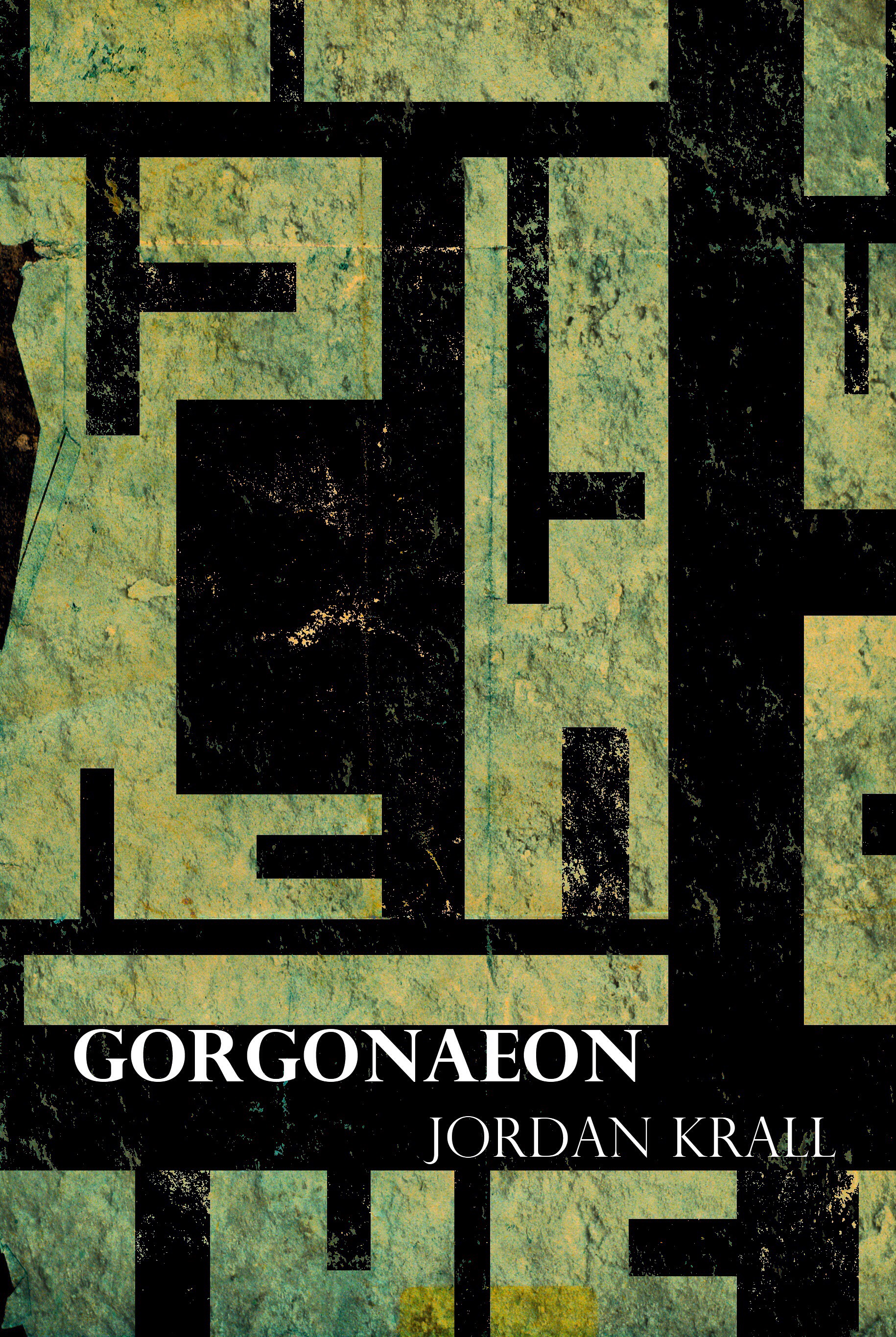
Review: Gorgonaeon by Jordan Krall (Dunhams Manor Press; 2015)

30 Nov


I must preface this review by saying I have not yet read Aeon, the first book in a series that continues with this book: Gorgonaeon

Part 1: 

Below are some notes I wrote for each of the first 26 pages (figures) of this disjointed but magical work of art:

Figure 1: 

Decapitated heads are found on the dining room table–although it is phrased as if the 2nd person protagonist usually goes to the basement rather than the dining room. There is a first person interjection of: “You wait for me to come home. But I will never come home.” An abstract charcoal illustration of a vaguely human form is printed on the opposite page. 

Where are we? This short, deceptively simple paragraph that is the first section of Gorgonaeon in its entirety, hooked me immediately.

Figure 2:

The “I” is outside gazing at a broken mirror lying beneath a ladder leaning against a house that has been uninhabited for years. 

Figure 3: 

We are introduced to a distracted Phillip who focuses on a shiny piece of metal on a podium during a lecture. The words from the lecture become a series of sounds he calls “memory-speech”; he transcribes them until his pencil breaks.

Figure 4:

In the year “198X”, Phillip receives a letter from a friend congratulating him on a new position and inviting him to a gathering for poets.

Figure 5:

The “I” reflects on his arrangement with his lover while looking at a picture in her purse of him taken when he was more attractive. 

Figure 6: 

The “you” finds a plastic bag filled with snakes near the highway. 

Figure 7:

“You” listens to audio cassettes of recorded monologues about a decaying garden from her “predecessor.” This “you” is for the first time identified as a she; it is also revealed that she prefers to observe rather than participate. 

Figure 8:

The “I” says she has a husband. She also photographs non-chain motels and arranges the results “in a sort of geo-architectural reproduction of the highway motels.” 

Figure 9:

Phillip floats through a garden, feeling so either from pills or the flower stems he has ingested. He sees a woman’s face in the moon. 

Figure 10: 

In an accusatory tone, the “I” interrogates the “you” about the desire to imbibe the residue of the “I”‘s mother.

I adore the line “It pains me to acknowledge your pleasure” in this section. 

Figure 11:
The “I” observes and draws a beautiful girl in a coffee shop, wondering if she’s being creepy. 

Figure 12:

Phillip begins taking pills at his wife’s recommendation only to have an odd vision of a man that is not him “in a wilderness of mirrors” where “green lights reflect off every surface” and he sees “only snakes.” 

Figure 13:

A ditch is described where toy snakes are often found; this was also, coincidentally, the same ditch where a murdered woman’s (Nicole Logla) body was found.

Figure 14:

The “you” has entered the “I”‘s house; the “you” is betrayed for seeking answers that will never transpire.

Figure 15:

Phillip gives a semi-successful reading from his book: A Complete History of Industrial Parks–the title and subject matter of his book is related to his job. 

Figure 16: 

The “I” examines Polaroids of horrified, close-up faces found in the closet of her motel room. 

Figure 17: 

The “I” appears to be addressing the “you” as her child. She asks her child to “embrace me in the presences of She Who Stares” and states her child will be buried tomorrow. 

Figure 18: 

Describes a man watching television in a motel wishing to be “the mythological motel man.” 

Figure 19:

The “I” states she has a “wooden visage” and now that she will be buried tomorrow.

Figure 20:

A creepy scene: Philip is lured into the motel room where he finds a sacrificed body which disappears into “the glassy walls of the motel room.” 

Figure 21: 

A “man” notes that the shards of glass he picks up will help him make a 24-hour film about “ugliness in the form of doomed reflections.” It is then stated that “you” will “crawl out of the earth tomorrow.” 

Figure 22:

A “herald’s message” requires a new brain to be deciphered. 

This was the first section that I had difficulty examining. 

Figure 23:

Philip cuts his lip and fills a doll’s face with blood as “a deep red offering.” 

Figure 24:

The “I” becomes a “scrivener of lurid rituals.”

Figure 25:

Phillip hears a “brutal account of his mother’s death” and is then able to learn about “the unsolved murders of the other women.” 

Figure 26:

Snakes are seen as “heralds” as the mind of the “I” disintegrates and she voices a nihilistic yet creative outlook: ex. “I am the builder with no tools.”  

Part 2:

Having pinned certain skeletal ideas of the first 26 pages to the screen segments above in the form of notes, analysis, and synopses, I’m going to let the rest of the work roll over me and jot down a few musings as I go. 

The shifts in time and perspective give the building of this book’s reality a kind of rippling effect.

As I plunge onward, I believe at least more than one character is also using the “I” at various points. Am I wrong?

Phillip’s coin-playing reminds me of the stone-fondling scene in Samuel Beckett’s Molloy.

The image of a man dressed in armor made of crocodile skin startled me. 

I have to quote page 56 in its entirety. It contains an unspeakably haunting vision of a dimension so hellish it would make even Clive Barker’s skin crawl:

“The arena is located in the middle of an industrial park. Lord Patchogue, the emperor-god incarnate, taunts the dwarves and the drooling freaks who view him as the epitome of power, pride, and sheer violence of will. Above the arena, the gossamer floats: a parachute of bloody desire of the creature-gods, the incantations spit out by the worshippers, eating their own skin, cooking it into their bread, spinning visions of unveilings. They slither through the air and through the earth until the asphalt cracks. The offices are infested with pests. There is no hiding from Lord Patchogue.”

A truly sublime and frightening passage that vividly paints a surreal nightmare.

When the “dreadful infant” is born a few pages later, I thought of Lovecraft’s moments of horrific unveiling.

The idea of highways and hallways consuming suicides is a fascinating one. 

This may be the ultimate vision of loneliness: 

“Do I desire company so much that I am forcing some aspect of physicality into existence, a false trail of imaginary guests?” 

Wow. That was an enjoyable, transfixing, and puzzling read! 

The lack of traditional narrative structure will frustrate many readers; I, on the other hand, was thrilled by it.

I felt as if the pieces to the puzzle were coming together as my brain connected several dots, but which were then, in the end, left unravelling in the darkness of glowing eyes and crocodile-skin armor as the mirror shards reflected a summoned spirit. 

I will return to this volume after I have read Aeon. I sincerely hope Jordan Krall finishes this ambitious and original cycle.

Read Gorgonaeon by Jordan Krall

Review: Zero Saints by Gabino Iglesias (Broken River Books; 2015)

28 Nov


The first line that struck me in this poetic, Spanish-language-infused noir was:

“The blackness covering his features sprouted ghostly tendrils that seeped into the night around us and made everything darker. Impossibly darker.”
It’s light hints of surrealism like this that make this book stand out from other noirs. 

Another random, great line: 

“The shoes on his feet looked five sizes too big and they were vomiting their tongues like alley winos.”

This book, despite the aforementioned surreal touches, is grounded in personal details and naturalistic experiences. The rawness of the violent scene in the bathroom comes to mind when thinking back on some of the more vivid moments in Zero Saints

Then there beautiful moments of tragic poetry like this one:

“La frontera is a place where miedo seeps into your bones and the silence you’re forced to keep allows the cries of dead children to enter your soul and break you in half like a dry twig. La frontera is a place where los huesos de los muertos are never buried deep enough and the pain of broken families and la Sangre de los inocentes has mixed with the plants and the air and the soil. All that darkness is what gives el rio its peculiar smell and green color. Some things have a bottom but they are bottomless. The infinite darkness that hides in that flowing jade vein is what makes white men with guns pull the trigger even when the figure moving under the crosshairs is a woman or a child.” 

As you can infer from the above-quotes passage, this book showcases a harrowing realism that cuts to the bone and is definitely not of the cliched, alcoholic, tough-as-nails, chain smoking detective–the narrator of Zero Saints admits that being a coward has kept him alive so far. 

I could basically quote the entirety of chapter 6 (where the above quote comes from). Whichever side the immigration debate you happen to fall on, this chapter will surely offer you a glimpse into the difficulty and terror ingrained in that experience, “because the thing about life is that time gets between facts and memories and as memories turn into what they are, facts start sliding back, moving into a space full of images from peliculas and skeletons from bad dreams and imagined monstruos and stuff that someone told you.” 

The rest of the book is elliptical and brutal. One later chapter comparing the difficulty of reality to the sustained faked sense of desire and enjoyment within pornography stuck out. 

There is a lyricism to this book that combined with brutality, a glimpse into the underbelly of modem Austin, Texas, and a holy tone using euphonic passages of the Spanish language, will offer the noir fan seeking something different and challenging, yet poetic and prescient, a vibrant new volume. 

Read Zero Saints by Gabino Iglesias
 

Review: Scary People by Kyle Muntz (Eraserhead Press; 2015)

16 Nov

  
A series of disturbing vignettes open this curious, extremely fun, and playful novel. 

The style of this novel is breezy yet concise and funny while it disturbs. For example: one character named Siguard–identified early on as a serial killer–shares a song with the narrator about eating children’s fingers; eerily, the song is non-fiction. 

I enjoyed the elliptical nature and blank space in Scary People. The tone was apathetic and detached and the lack of extraneous description was refreshing–a task that is difficult for a writer but which Muntz makes look easy. 

Interspersed with the plain but absurd dialogue are dark gems like this: 

“You’re awful. If I was a teacher, I would say you have no future, and years from now you’re going to die in a gutter with syphilis and hemorrhoids, while living on a diet of plastic wrappers, fermented rats, and moldy grass, with half of your limbs rotted off, and only one eye.” 

And this: 

“”Nothing makes sense,” he said. “It’s kind of sad, really. The only light this world has doesn’t illuminate anything. All it does is shine brighter, so we have to pay attention to the things we don’t want to see.” 

I wish he wouldn’t be so profound, by accident.” 

We have glimpses into harrowing but transformative philosophical ideas amidst all the cartoonish violence. After re-reading the second, above-quoted passage a few times, it’s meaning still mystifies me–is it suggesting that optimistic aspects of life are difficult to discern because they are seen under the same light as negative ones? 

A disturbing scene with pirates is a memorable. I’ll leave it up to your imagination what they use a mean-spirited Redbeard’s peg-leg for! 

I loved the moment when Karen spits flame!

It was odd yet fun to encounter the scene Muntz and other writers performed at this year’s Bizarro Con later in the book, particularly having read about the fates of the characters during the 1st 200 pages–this pushes the RPG scenario into a different space than I had originally envisioned during the performance; if the conflicts and growth of the characters is sort of erased by this new scenario, then what plane of reality are we on now? Although the characters actions were cartoony in the first 200 pages, there was, while not exactly emotional depth, still, emotional currents and a rawness or: a sort of sadness observed at the heart of all human interaction. 

Which is a relevant observation as it turns out, given the metafictional nature of the final third. 

I deeply loved this book. It was fun, original, and a joy to read. I’ve never read anything quite like it or felt my sense of grounding become an entrance into a cartoon while being pinched in the rear by shears. 

Read Scary People by Kyle Muntz

Review: I Will Rot Without You by Danger Slater (Fungasm Press; 2015)

14 Nov


I Will Rot Without You

A poetic homage to the threat of cockroaches? A series of surreally humorous observations? A New Jersey blood brother of Dostoyevsky’s underground man? 

The encounter with a neighbor (Dee) in the hall, offers a haunted glimpse into what is surely a major theme in this book: morbid devotion. And then we get a weird blend of Basket Case 80s horror and Notes from the Underground when she reveals amputated pieces of her boyfriend sewn to her chest. 

Between scenes that could be straight out of the end of Psycho, we hop on the wings of an eerie butterfly to discover a fantastical plane amidst all the vermin and devotion, a different plane of existence so fierce and ignited by poesy that it’s immune to rot or decay.

Fingers of a boyfriend crawl about, stitched to a neck–or sometimes legs become tree trunks when we dream of pus bubbling in boils. 

A line of a 100 cockroaches pass mold spores (“little white and pink bulbs in their palpi”) from the bathroom to our sleeping hero’s mouth which are “held like torches.” 

I loved the following passage: 

“Like a specter she stands. She is the poltergeist of doorframes. She peeks into the apartment, unsure if she should step out of the purgatory of the vestibule and back into this graveyard she used to call her home.” 

Another line I adored: “Her flowers suffocate the garden of my heart.” 

Nightmarish Twilight Zone moments intertwine with a Remedios Varos painting. 

Sitting on a throne of human skulls, we gaze down on the festering city. 

A pile of bills resembles Ernie as he hobbles about decaying and with new wooden mop legs.

Your face may be rearranged by this book; your soul may become disfigured. 

Ernie discovers a ghastly surprise about Dee when the lights are low–a surprise that rivals what Jack Torrance finds on room 237.

This novel shares moments in a beautiful realm of the ineffable while making love feel tragic and ephemeral: 

“These are the people who I need to continue to carry around with me. I just–need to remind myself that I used to be a person before we poisoned each other.”

And:

“Our time together, it was like smoke. You filled my lungs, briefly, and then I breathed you out and you were gone.” 

I read the book over the course of a single morning. This definitely has the humor of previous works I’ve read by Danger Slater, but this one has darker themes and a more poetic conclusion. 

Read I Will Rot Without You by Danger Slater

Review: Sapient Farm by Querus Abuttu (Scary Dairy Press; 2014)

14 Nov

  
A well-structure speculative suspense novel with human and pig-blended imagery. This novel also feels vaguely post-apocalyptic, although the exact reasons for the doom are left hazily in the background; we are, more or less, plonked down beside these human and pig hybrids in media res.

We get to go on mad adventures through sleazy Las Vegas and murders in a desolate forest.

Then we ride with giggling pig children in the backseat, their foreheads barely reaching he bottom of a car window down country roads. 

An intense scene in the barn between Ben and Binah–one the pig people–jacks up the stakes in the plot considerably, and my attention focused like the head of an arrow. 

The rest of Sapient Farm doles out heavy doses of shocks and thrills and offers bizarre yet potent imagery. As in any grand post-apocalyptic yarn, the plot weaves off in multiple threads–later to reconnect. 

Gevu–the other pig person–get mistaken for the Chinese pig God (Zhu Bajie) from Journey to The West and is featured in a few scenes worthy of De Sade. 

I particularly liked the surreal feel and imagery of the epilogue. I sort of wish this mutation had occurred earlier but hope there’s a speculative bio-horror sequel to Sapient Farm from the perspective of Binah! 

Read Sapient Farm 

Review: The Four Gentlemen of the Apocalypse (The Strange Edge; 2015)

24 Jul

20150724-114738.jpg

Four Gentlemen of the Apocalypse

“The Ballad of Terror Tiny Tim” by Douglas Hackle

This one has a hilarious and shocking twist in tone and content about midway through the first chapter. I won’t spoil the exact shift, but I will say that the narrator’s desire seems particularly at odds with the fate of his handicapped son during a Little League game. I empathized with the son at first, having, at one time, been the worst player on a Little League team as well back in the late 1980s.

During chapter 2, I thought about the difference between Comedy and Bizarro; the difference is: darkness. Yet it is an absurd darkness, not necessarily a pure and unrelenting darkness with sick humor as in the film Heathers. So we have dark absurdism grounded in a palpable American experience, at least in this one; the literary movement contains practitioners from other countries as well. The dungeon scene was unforgettable and offers a new meaning to the concept of portion control.

In a Bluebeard-style room, we meet a surprise guest. The satirical rap sessions caused me to chuckle and wonder if that genre of music would ever cease dominating the charts and the radio. Yes, there are current gems (Run the Jewels comes to mind), but in most rap the lyrics often plummet in at least one of the following four annoying directions: misogyny, narcissism, materialism, or sentimentality. This is parodied effectively in this ghoulish tale by Douglas Hackle.

“The Canal” by Dustin Reade

Bizarre waterways and a fridge full of frozen cats greet the reader like an invitation to an alternate dimension at the beginning of this tale.

Bathing cat corpses is routine as is sitting next to a cockroach smoking a cigarette on the commuter train homeward. Once back in our vicious narrator’s humble abode, we witness a bizarre and sadistic ritual replete with the skinning of discoveries from the local canal. This lurid passage is certainly not for the squeamish; nor are the after-effects resulting from wearing the skins, although the disgruntled neighborhood is undoubtably aware of his presence afterwards.

The chapter entitled “Cat People” was my favorite, featuring hairless cats lumbering about on two legs while wearing robes. One might feel as if she’d jumped off a diving board into a sea of psychedelic nightmares by this point.

Further fun adventures lay in store with a visit to the library with a cat lady and various other men in cat suits who also abide by Bartleby’s famous mantra. I particularly liked the moment when, on the verge of getting fixed, Russell witnesses a nurse torn apart to reveal stethoscopes and surgical instruments as her internal organs.

“I Took One Apple to the Grave” by G. Arthur Brown

This is the most dreamlike piece in the book so far, despite there being less fantastical elements than in the others; Brown’s wicked sense of humor is more subdued than in other works I’ve read of his. This one has passages that alternate between a fairy tale mood and a bleak Dostoevsky scene.

I wanted to hear more about the three brass dwarves swimming until they found a black swan. The image of a tiny hand emerging from a lanced boil is not one I’ll soon forget.

Angel Hair: five golden cigars. I wonder where this whimsical but dark tale will lead.

Two men wait for a diamond ship to rescue them while talking to a snowman who may very well benefit their conditions by stabbing them.

An island of wild ponies who can swim but also bite and kick, spoiling dreams. Or a girl writing in code about her grandmother before being pecked to death by geese. Such nightmarish stories lie almost buried within this transfixing tale.

The mysterious wolves, talked about frequently in this tale’s first section, do eventually emerge; yet I refuse to spoil the details of their grotesque entrance.

The scene with the Winter Witch will certainly cause your toenails to curl and your eyeballs to explode. Either that, or Brown’s deranged imagery will haunt your dreams forever.

Horses flicker in and out of existence and wolves float into a child’s coffin. Characters are deemed redundant and then, in a rather aggressive metafictional act, are whisked from the story retroactively.

I did laugh out loud during this one when the conversation took place about the significance of certain characters with hilarious names like Glasscock, Bracgirdle, and Bonebrake.

I loved the sophistication of this story’s odd but cohesive structure; it sort of resembles an experimental film made by a ghoulish Monty Python team. It’s my favorite of the quartet on display here.

“Wizard and Robot in the World of Sand and Bones” by S.T. Cartledge

Girl Robot and The Wizard Made of Glass must fight against the influence of sand during their otherworldly but love-fueled journey.

They search for dragons in the sky as they discover dragon bones in the ruined sandcastles of former homes.

This one has a more lyrical flow than the other three.

The odd reality created herein fuses corporeal diffusion with sailing trips through sandcastle skies alongside dragons and a wizard who ages more quickly based on the level of strenuousness contained in each of his magical tasks. Yet, luckily, a dragon bone heart may await his resurrection.

Read The Four Gentlemen of the Apocalypse

Review: The Summer Job by Adam Cesare(Samhain Publishing; 2014)

25 Feb

20150225-192218.jpg

The Summer Job

This was a fun and pulpy book that reminded me of both Richard Laymon and Charles Burns’s Black Hole. While not as intricate as Black Hole nor as fetishistic as Laymon’s work, it was still an enjoyable little romp to the dark side of hidden secrets in small towns.

I will not spoil the ending here, but I was a bit surprised by Tobin’s behavior during the finale. Allison’s clothes (and Davey’s other followers’) at the end is the inspiration for the cover. The image of her toothless smile with the crown of thorns digging into her forehead as she wears the billowy gown is not one I’ll soon forget. The scene with Daisy and the burned priest was also a stomach-churning one.

While I enjoyed this one, it didn’t quite come to life as potently as The First One You Expect. I would list that one among my top ten horror stories. With this one, though, Cesare proves that he can craft an even more ambitious horror novel in terms of structure, tension, and grotesque imagery–a difficult balance to achieve which he manages to do as he keeps the surprises coming right up until the end. Still, I often found myself longing for the surreal and poetic aspect of Black Hole–although, in truth, it may not have been an inspiration for The Summer Job at all.

Still, that being said: I look forward to reading many more works from Cesare but do hope he pushes the envelope a bit more in terms of shocks and style. He’s already mastered the craftsmanship aspect like a master.
Check out The Summer Job here.

My Story “The Ghouldigger’s Daughter” published at Bizarro Central!

14 Feb

20150213-214138.jpg

Lorna must face a series of mind-bending adversaries in the search for her kidnapped daughter.

Read it here at Bizarro Central.

Review: Pax Titanus by Tom Lucas (Eraserhead Press; 2014)

9 Feb

51iETnyDijL._SY344_BO1,204,203,200_

Contains Spoilers

This action-packed, surreal, and humorous science fiction novella will challenge your science fiction genre expectations and confound your worldview.

Meet Pax: a four-armed intergalactic beefcake. Join him as he battles an array of imaginative beasts and contenders for the title at the demand of an egotistical Emperor.

Often, Pax Titanus reads like a dark adult cartoon. I wish there were bizarro novellas like this one when I was growing up. I would have devoured them with the gusto I spent lapping up every last b horror and drive-in classic from those long-forgotten video rental shelves.

The opening had a great hook (eventually, the two best friends would put their hands on each other’s cocks, ha, ha). Their conversations are refreshingly crass for a sci fi novel. Most sci fi I’ve read lacks the sense of humor of this one (except for PKD, who is the best IMO). Craxx’s sensual obsession with his sister is also funny and irreverent.

Here’s a memorable scene: Pax enlarging himself while saving Craxx with his monstrous member as they landed on the planet’s wailing diva and splattered the crowd with his love juices. Crude yet imaginative as the best of bizarro always seems to manage.

I read in the intro that this book was originally a short story. I asked Tom Lucas about the story’s genesis; he told me it was produced in a Litreactor writing class with Rose O’Keefe.

A vivid and mysterious call to adventure commences, along with a well-argued refusal of the call; however, the adventure must be undertaken: it means saving Pax’s family. The destruction of the journalists is funny scene. Pax’s relations with his squid wife and her secretions a bit eerie as she must’ve smelled his musk through her beak.

I would say Tom’s strength is definitely in writing imaginative action sequences with a sense of spectacle. His talents really shined in the first fight sequence with the…Mugworth (sp?). It was a nail-biting scene, which must have been difficult to accomplish given the odd nature of both the opponents’ bodies, but since we learned of Tits’ growth abilities earlier, it was a sound fight that did not tax the plausibility detector in this reader, even as his overweight fly trainer hovered in the corner.

The beaver with the hair caught in his throat was pretty hilarious–I got the sense of an ominous presence, but then when he coughed up the hair he became rather goofy. The second fight left me wanting for a bit more obstacles and passed too rapidly. The mana-pot and the fireballs made for RPG-esque imagery.

The scene with the dead Craxx and his “ninja handler” provided another PKD-esque horror moment. I love when horror blends with sci-fi and honestly wish their more of this sort of stuff out there.

The fight with the brain squealer was memorable. The mixture of cuddliness and terror reminded me of one of my favorite bizarro novels: The Cannibals of Candyland.

The final fight sequence did not disappoint. The inter-dimensional time-shifting device created quite the final adversary. The ending balanced humor with pathos ingeniously. Overall, a wild and fun ride. Sort of a bizarro Rocky mixed with Farscape.

Prepare to be disgusted, shocked, surprised, and awed at the magnificently grotesque set pieces this novel conjures up with a slightly satirical tone; that being said, this novella is not strictly a satire. It plays by the rules of the pulpy bizarro playbook: it delivers in equal doses of fun, entertaining storytelling, crisp and direct prose, unexpected plot twists, and bizarre and original imagery that somehow mocks and reshapes science fiction tropes while celebrating them.

Read Pax Titanus.

Review: Kill Ball by Carlton Mellick III (Eraserhead Press; 2012)

6 Jan

20150106-100433.jpg

Fusing giallo with a children’s film concept (people must stay in hamster-ball-like bubbles because of a disease) is an unexpected and brilliant idea. The darkness of the tropes in the giallo genre also keep things from getting too cartoony.

The book functions like a fast-paced thriller, although I do wish certain giallo elements had been played up more, particularly the elaborate death scenes of Argento–although I’m not sure if this would’ve worked on the page.

The explanation and inner-workings of the devious Kill Ball are unexpected and imaginative. The imagery of the narrator and Siren’s evolved bodies was also original.

Carlton Mellick III certainly has a knack for balancing conventional structures with bizzare and outlandish ideas. He states in his introduction to this book that he considers it to be a satire of the giallo genre. It definitely has its share of comedic moments, particularly early on where I chuckled at least a few times (people making fun of each other for how they chose to dress their balls). Kill Ball also contains its fair share of horror movie imagery, yet also resembles a comedy in which one cares about the characters (something like Superbad or Planes, Trains, and Automobiles).

Buy and read Kill Ball.